Arvell
- WHAT WE DID
Product strategy
UX design
UI design
- INDUSTRY
Renewable energy asset management
overview
An AI-assisted operations platform for Arvell, turning wind, solar and storage alerts into maintenance decisions a person signs off.
context
Arvell runs wind farms, solar plants and battery storage sites for the companies and infrastructure funds that own them. Its work is operations and maintenance (O&M): keeping each asset producing. It manages 40 to 60 sites across several countries. Portfolio managers track availability and cost, while control room operators work the alert feed.
the challenge
Turbines, solar inverters and batteries each send SCADA data, the equipment readings and alarms, in their own format. Alerts arrive faster than the control room can review them, and no single view covers the portfolio. Maintenance stays reactive and costly. Any automated triage also had to show why it escalated each case.
one incident, not a hundred alarms
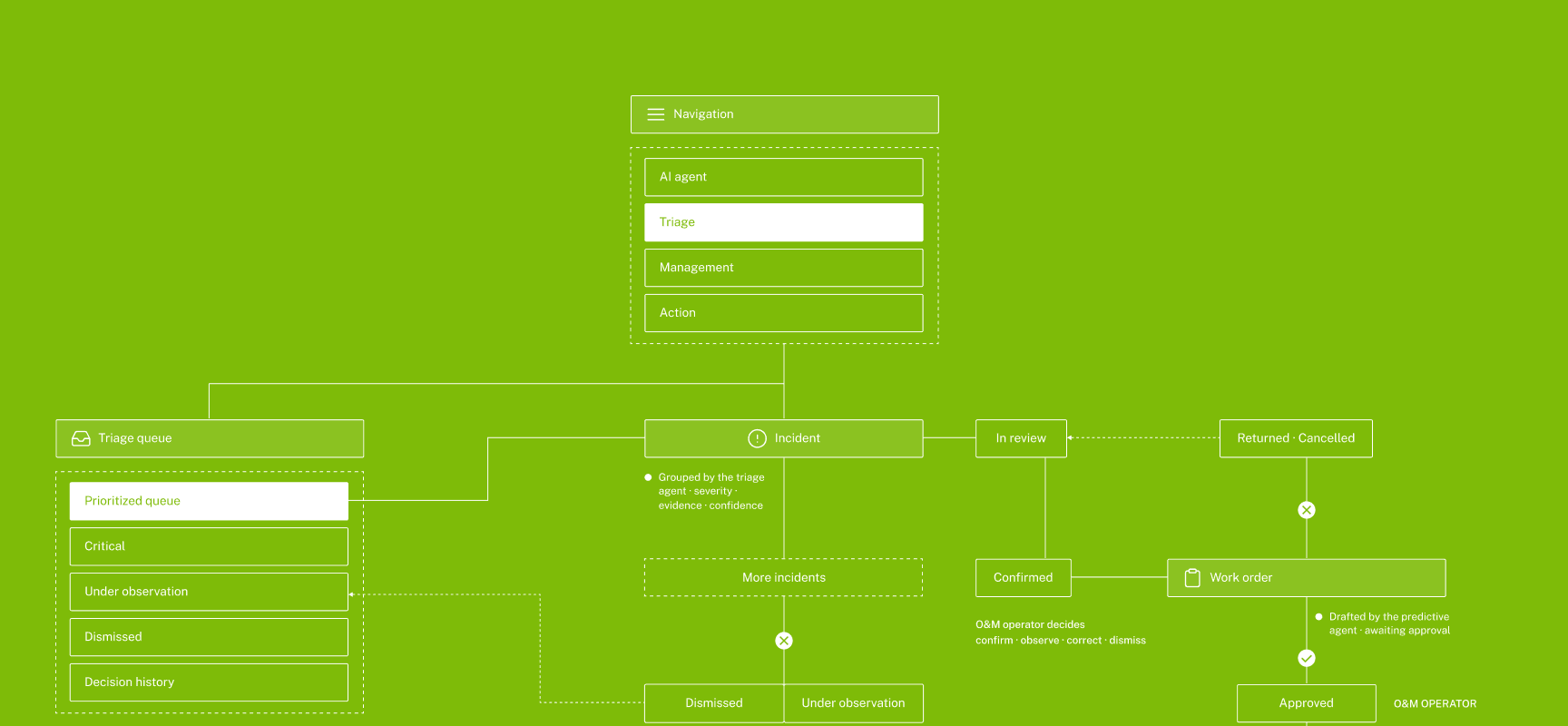
We made the incident the unit of work. Signals from every asset type are translated into one shared data model. A triage agent groups related alarms into a single case, ranked by safety risk and estimated loss. Duplicates are suppressed, never deleted, so every original event stays on record.


the agent drafts, a person decides
Three AI agents triage alerts, predict failures and answer portfolio questions. Only the operator confirms incidents, approves work orders and dispatches crews. Each recommendation shows its evidence and the cost of doing nothing, and the record keeps sensor data, AI inference and human decisions apart. Low confidence never hides a critical alert.


recommendation first, evidence on demand
Operators handle many cases per shift and check the data only when something doesn't add up. So opening a case shows the suggested action, its timing, its confidence and the signals behind it. Charts and decision history appear on request, keeping each call quick without hiding the proof.


impact
Arvell's control room now decides on grouped cases from one queue for wind, solar and storage, with the evidence attached. Every automated suggestion traces back to its data and to the person who approved it. When data arrives late or conflicts, the platform flags it, so a reporting delay no longer reads as lost production.